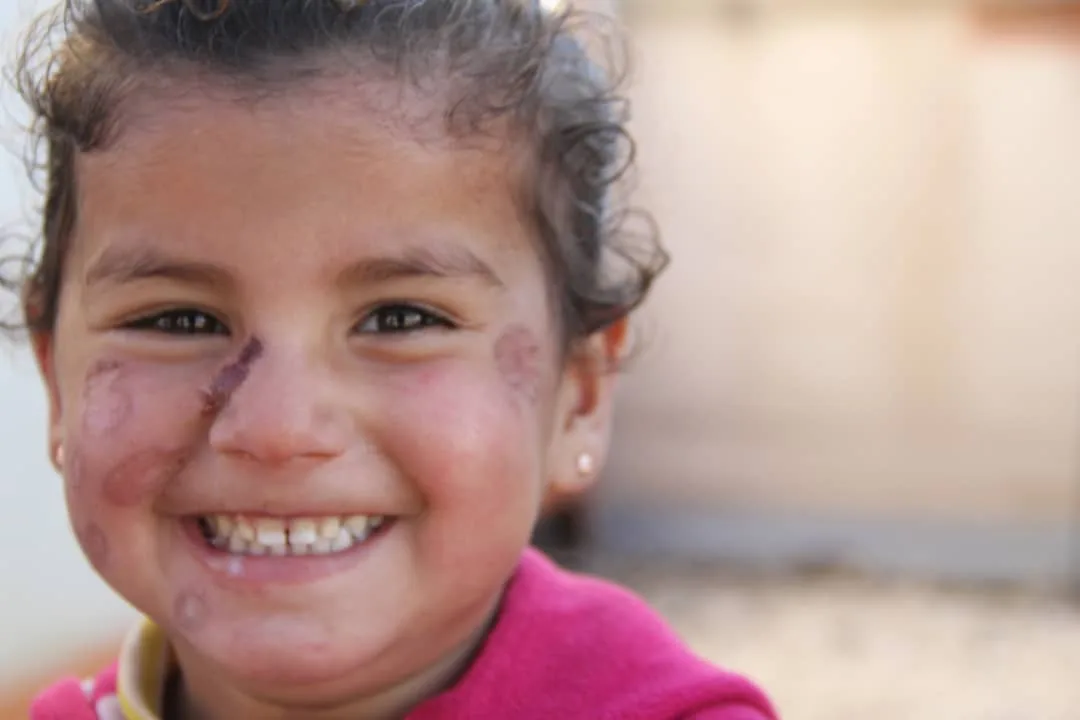
According to estimates by the World Health Organization (WHO), between 500,000 and 900,000 new cases of visceral leishmaniasis occur worldwide each year. The WHO also points out that the disease has spread considerably since the beginning of the 21st century.
The disease is transmitted by sandflies. When a sandfly feeds on the blood of an infected person, it takes in the parasite. The parasite can then be passed on to another person through a subsequent bite.
Several characteristics make sandflies particularly difficult to deal with:
- They generally make no audible sound, making them difficult to notice.
- They are about one-third the size of an ordinary mosquito, or even smaller, which makes them difficult to see.
- Their bites often go unnoticed because they may not be painful. As a result, people may be unaware of the infection until symptoms begin to appear.
Sandflies are usually active between dusk and dawn. To avoid being bitten, people are therefore advised to limit outdoor activities during these hours.
With summer approaching, temperatures rising, and risk factors becoming more prevalent, concerns are growing about the further spread of the disease.
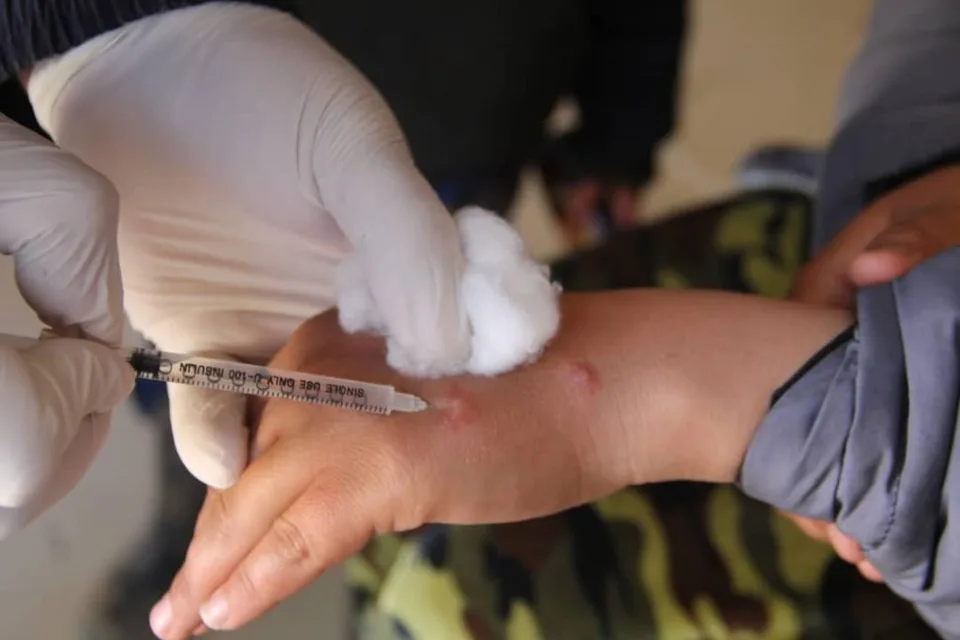
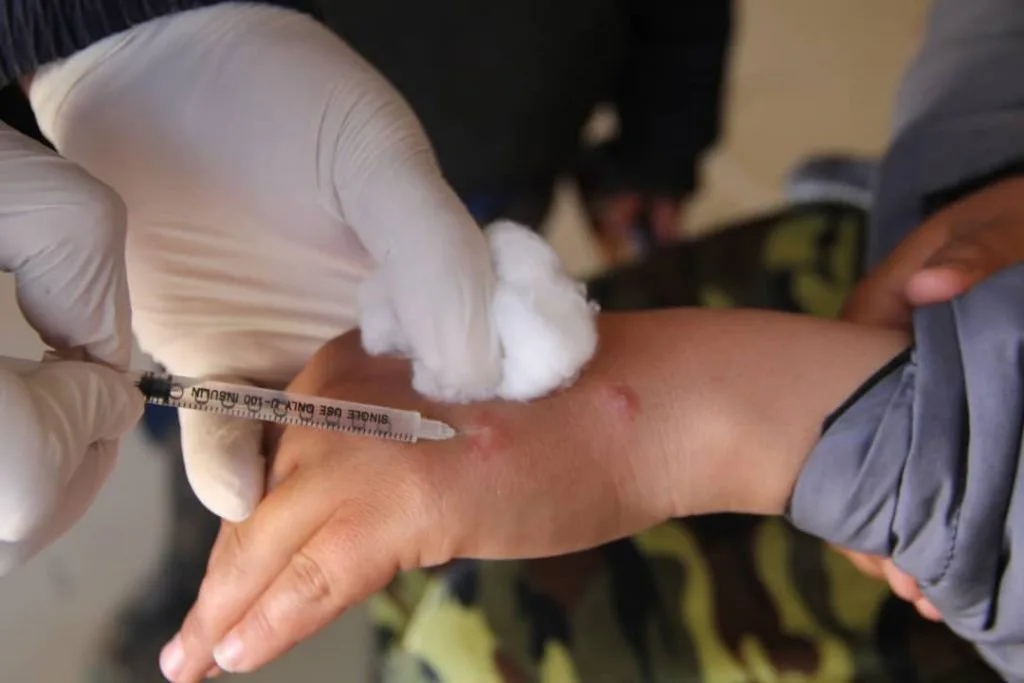
In 2019, Khotoat treated 151 cases in the western countryside of Deir ez-Zor, most of them children. We also conducted awareness campaigns to inform communities about the disease, its risk factors, and methods of treatment and prevention.
Risk Factors
Inadequate waste disposal and open sewage systems: Areas without proper waste management systems, particularly those with open sewers, provide favourable conditions for the breeding of sandflies that transmit the disease.
Overcrowding: Densely populated areas attract sandflies because they provide a large number of people on whom the insects can feed. Such conditions are particularly common in overcrowded, impoverished communities.
Sleeping outdoors: People who sleep on rooftops or in gardens face a greater risk of being bitten. In rural areas, sleeping outdoors may be a customary practice. Poverty, inadequate shelter, disasters, and wars may also force people to sleep outside, increasing their exposure to sandflies.
Malnutrition: Poor nutrition increases the likelihood that an infection will develop into visceral leishmaniasis, which can be fatal.
Migration and displacement: Moving into areas where sandflies are present can increase the number of infections. This is particularly common during disasters and armed conflicts.
Treatment and Prevention
Early diagnosis is essential. Anyone experiencing symptoms should visit a dermatologist or the nearest health centre as soon as possible to receive appropriate treatment.
There is currently no vaccine against leishmaniasis. Preventing sandfly bites is therefore the most important protective measure.
This includes controlling sandfly populations through improved public sanitation and the drainage of marshes, as well as taking personal precautions.
How Can You Protect Yourself from Sandfly Bites?
- Apply insect repellent to exposed skin and beneath sleeve and trouser openings. Repellents should be used sparingly on children between two and six years old and should not be used on children under the age of two.
- Wear long-sleeved shirts and socks when leaving the house, and tuck your shirt into your trousers.
- Apply insecticides to indoor surfaces. Outdoors, suitable products can be used in the form of vaporising tablets or liquid preparations.
- Stay in air-conditioned spaces and use fans during the hours when sandflies are most active, between dusk and dawn.
- Use insecticide-treated mosquito nets.
- Install fine-mesh screens on windows and doors.