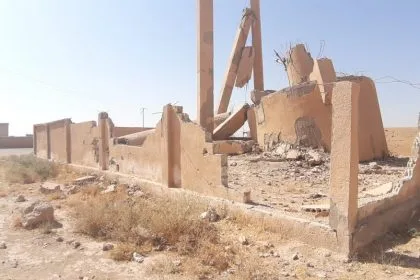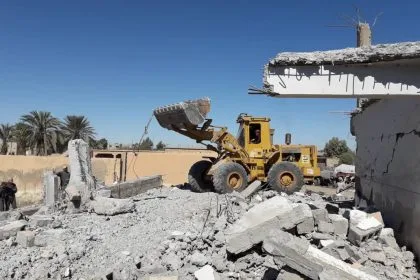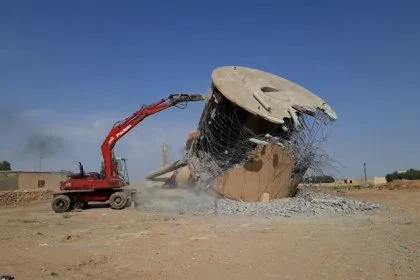
The first phase of the war debris and solid waste removal project has been completed. Operations began on 15 August 2019 and continued until 13 December 2019.
The numerous risks and challenges encountered during the project deserve particular attention.
We identified serious hazards at many schools and damaged buildings. The situation was especially difficult because some of these buildings were still in use despite the destruction.
Classes continued in some schools, while other damaged buildings provided temporary shelter for displaced families.
In addition, most of the work sites were located immediately beside residential areas and were often surrounded by farmland that local residents continued to cultivate.
One of the greatest challenges was the absence of specialised mine clearance teams in the region.
Dangerous remnants of war were discovered at several schools, forcing us to suspend operations on multiple occasions.
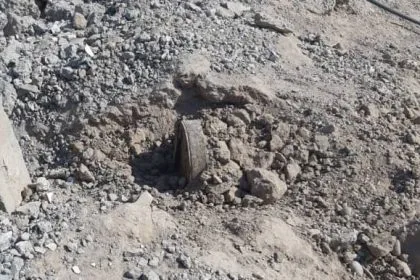
Our teams found a mine at al-Bu Musa al-Muhdatha School and a pistol among the rubble at Shahada al-Khalil School.
A particularly distressing discovery was made at al-Muhaimida al-Gharbiya School, where a decomposed human body was found among the debris.
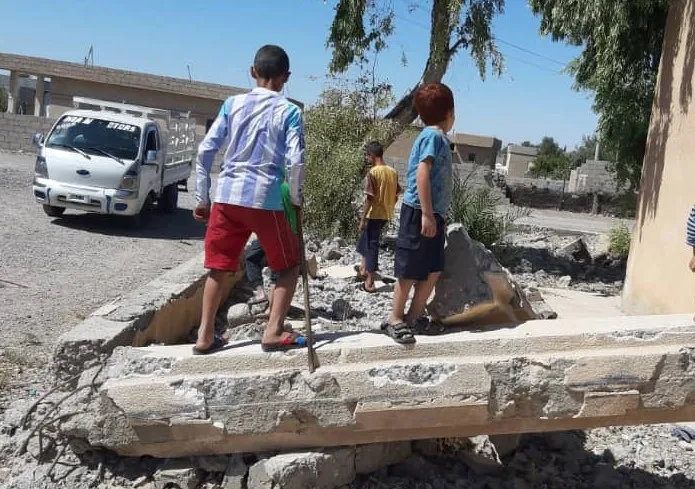
Remnants of war and unexploded ordnance were also discovered at al-Juneina al-Rifiya School.
At most of the work sites, our teams also encountered venomous snakes and scorpions sheltering among the rubble.
The project was therefore particularly important for local communities, especially children.
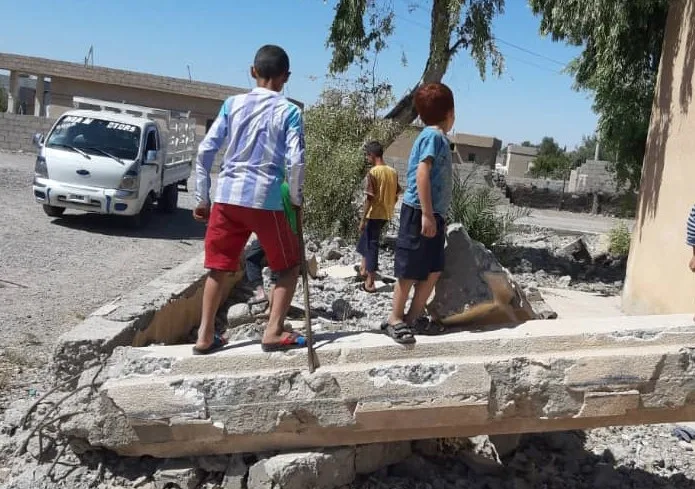
Because of the war and the lack of suitable playgrounds, many children used destroyed buildings and areas covered with rubble as places to play.
At almost every site where we worked, photographs were taken of children playing on or among the debris.
Despite the serious dangers involved, awareness of these risks was often insufficient.
Even previous accidents had not discouraged children and their parents from continuing to use these dangerous places.
Beyond the immediate physical risks, the presence of rubble also caused considerable psychological distress.
This was particularly evident in schools.
Teachers and other school staff were often aware that weapons and explosives remained in the buildings. Nevertheless, they had to continue working under these dangerous conditions.
The clearance operations helped eliminate these hazards.
Our work was not limited to removing rubble. It also included cleaning the affected areas, removing waste, and clearing dense overgrowth.
Suleiman Ahmad al-Abd, a student at al-Muhaimida al-Gharbiya School, describes his experiences before and after the project:
"We couldn't move around freely or play in the schoolyard because we knew there was a dead body under the rubble. Some parts of the body were clearly visible.
We were also afraid that there might be explosives near the body.
Many of my classmates stopped coming to school altogether because they were frightened. Others attended classes only irregularly.
I continued going to school because I really wanted to learn.
Even so, I was constantly anxious and afraid. I could barely concentrate during lessons.
After the body was removed, we started attending school much more regularly.
The school was cleaner and safer, and we could move around freely again."
Hiba Khalid al-Abd, a student at al-Juneina al-Rifiya School, also describes the situation before the project began:
"There is no other school in our village that we could attend.
But explosive remnants were still lying on our school grounds, and we were constantly afraid that they could explode at any moment.
Because of this, many children stopped going to school.
Whenever we saw those explosives, they reminded us of the war and the bombardments we had experienced over the previous years.
After the explosives were removed, we felt safe at school again.
We finally had a large space where we could play.
And because the explosives were no longer there, we were no longer reminded of the war and the bombardments every time we saw them."