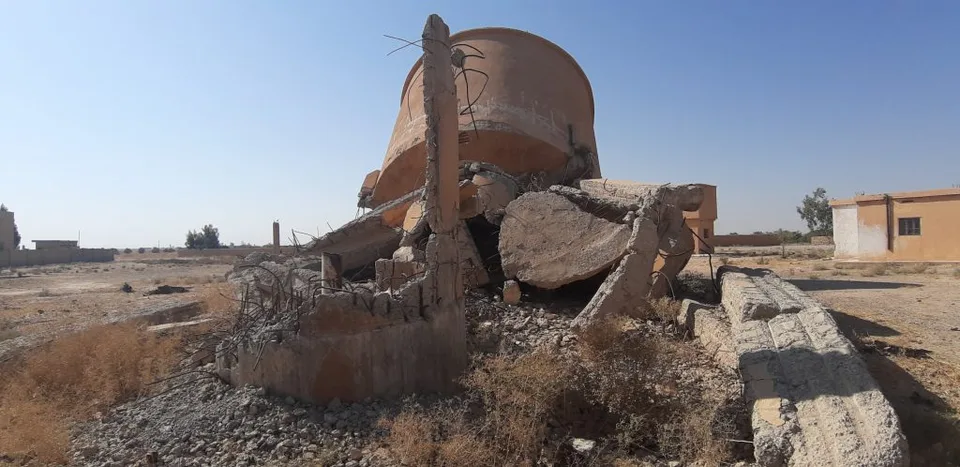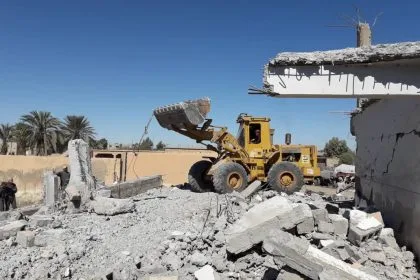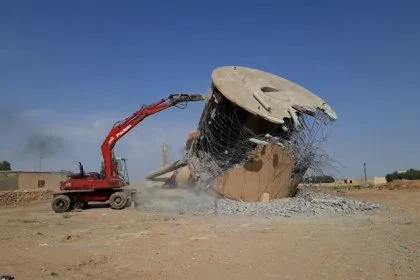
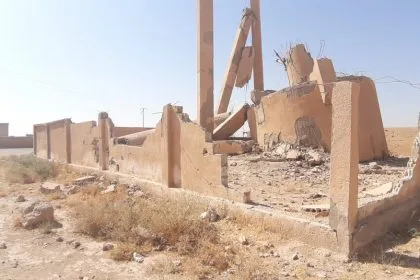
On 29 September 2019, we began a comprehensive assessment of war debris and waste across the Jazira region of Deir ez-Zor.
Two teams were formed to survey villages affected by the war in the western and eastern countryside of the governorate.
The original plan was to assess 35 villages by the end of November 2019.
However, on 20 November 2019, we decided to add four more locations to the assessment: al-Kashma, al-Shaafa, al-Susa, and al-Baghuz.
These communities had initially been excluded for several reasons.
When the assessment began, security conditions there were still too dangerous. In addition, these communities lacked functioning municipal administrations.
As the survey progressed, however, we noticed that increasing numbers of residents were returning to their homes.
At the same time, large quantities of war debris and waste remained in these areas.
We therefore needed to establish a reliable database documenting the quantities of debris and waste present and encourage other humanitarian organisations to intervene as quickly as possible.
The presence of mines was another serious concern.
The newly included communities had initially been unsafe because of the large number of mines.
However, following the partial clearance of mines as residents returned, security conditions had improved somewhat.
This made it possible to include these locations in the assessment.
A total of 39 towns and villages were surveyed.
The assessment was completed on 25 November 2019.
Khotoat now has a comprehensive assessment of war debris and waste accumulation across the western and eastern parts of the Jazira region of Deir ez-Zor.
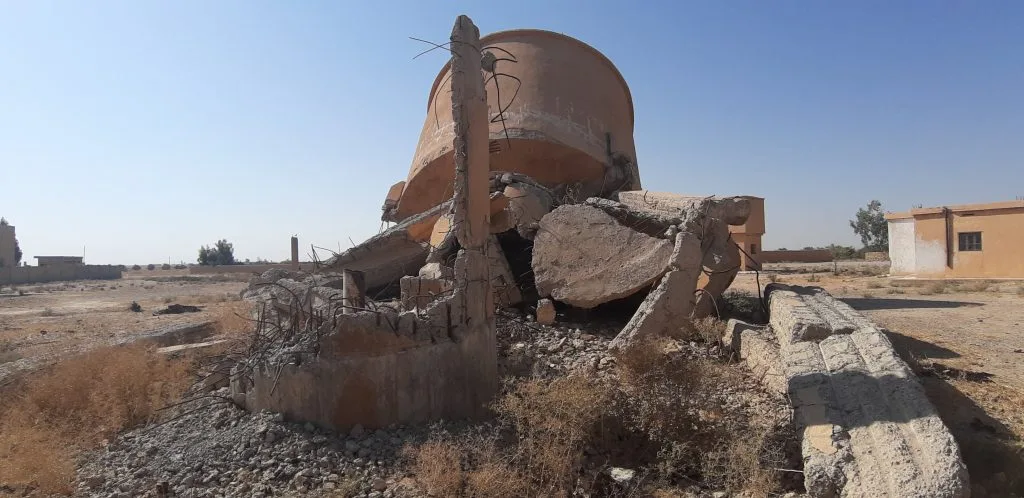
Challenges and Safety Risks
During the assessment, our staff reported several difficulties and dangers.
The main challenges included:
Unexploded Ordnance
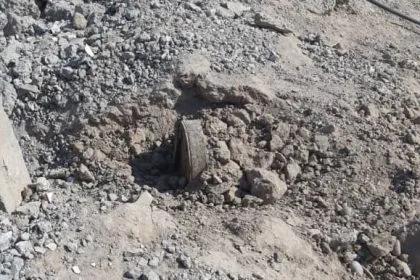
Unexploded projectiles were discovered at several of the surveyed sites.
The situation was particularly dangerous because some of these objects were mixed with ordinary waste.
Unsafe Access Roads to Existing Landfills
Another challenge was the uncertainty surrounding the safety of roads leading to designated landfill sites.
Many of these landfills were located outside residential communities in desert areas where old military positions still remained.
For this reason, many villages had abandoned their previously designated waste disposal sites.
Instead, new unregulated dumpsites had appeared close to residential areas, and in some cases even within the villages themselves.
The completed assessment can serve as a reliable source of information for future war debris and solid waste removal projects.